
Accountant or CEO – who should do the forecasting?
15 March 2026Who should build and maintain the cash flow forecast of your company? Accountant, CFO, CEO, head of sales, anyone else?
To answer this question let’s start by reminding ourselves: why do we do forecasting at all?
Why do we do cash flow forecasting?
We do it to make sure if we are likely to have enough cash in our bank accounts for the foreseeable period. So that we can make all necessary payments (salaries, supplier invoices, taxes, loan repayments, dividends – anything) on time. And if the forecast suggests we might have a cash shortage, we want to find out about as soon as possible while there is enough time to take action and avoid it.
We can never be 100% sure about our forecasts as not all circumstances are under our control. But we do want to make sure forecasts reflect our best assumptions on when can we expect to receive and when do we need to make payments..
When will client A or client B make the payments on projects we are currrently delivering for them? How much VAT will we have to pay next month? When do we plan to hire additional team members? When do we plan to start the next major marketing campaign and how much will we be investing? These are just some of the questions that we need to answer on regular basis.
So the next question is: who in the company is best positioned to make these assumptions?
Who can make the best assumptions?
It is very rarely one person who knows everything about everything, even in small and medium companies.
Many assume that forecasting is something accountants (or finance managers) should do. That might be the best choice in some companies. But let’s not forget that vast majority of small and medium companies don’t even have an in-house accountant, let alone a finance manager or CFO.
Small and medium companies use services of outsourced accounting firms and in most cases end up agreeing on a very limited scope of services. Such as preparing reports on the transactions that have already taken place and calculating the upcoming tax liabilities. And they are rarely briefing external accountants on the progress of projects they deliver, new contracts they are about to sign or hiring plans.
So instead of asking ourselves “who should prepare the forecast?” we should ask “who needs to contribute with the assumptions that will make the forecast as reliable as possible?”.
The best result is achieved in collaboration
The first step is to identify who in the company should contribute assumptions on each of the most important revenue sources and cost items. Both the amounts and timing are important. In most cases it will be more than one person.
The next question: how will we collaborate? There are two main options.
a) Assign the responsibility of forecasting to one person and everyone else will brief that person as soon any of the assumptions they are responsible for have changed; or
b) Grant access to the forecast to everyone who is involved in forecasting so that they can adjust their assumptions directly in the forecast.
Both options have their merits. But more and more companies discover that (b) allows them to move ahead faster and be more efficient. Just think of all the time you will save by not having to brief the only person who has access to the forecast. And how many misunderstandings you will avoid.
Choose a tool that makes collaboration easy
Some companies that practice (b) create a spreadsheet and put it on a shared folder. This can work but is time consuming and risky. Someone needs to check whether all the formulas still work and date ranges are periodically extended as required. Whether the planned payments have been made or received, whether current cash balances are correct etc.
It is much better to delegate all of the above to automation. Try Tailwind – an automated and visualized cash flow forecasting tool that works in your browser! Your initial forecast will be ready in less than 10 minutes. Every time you log in the forecast will start on today’s date and will update itself as it works in sync with your bank account.
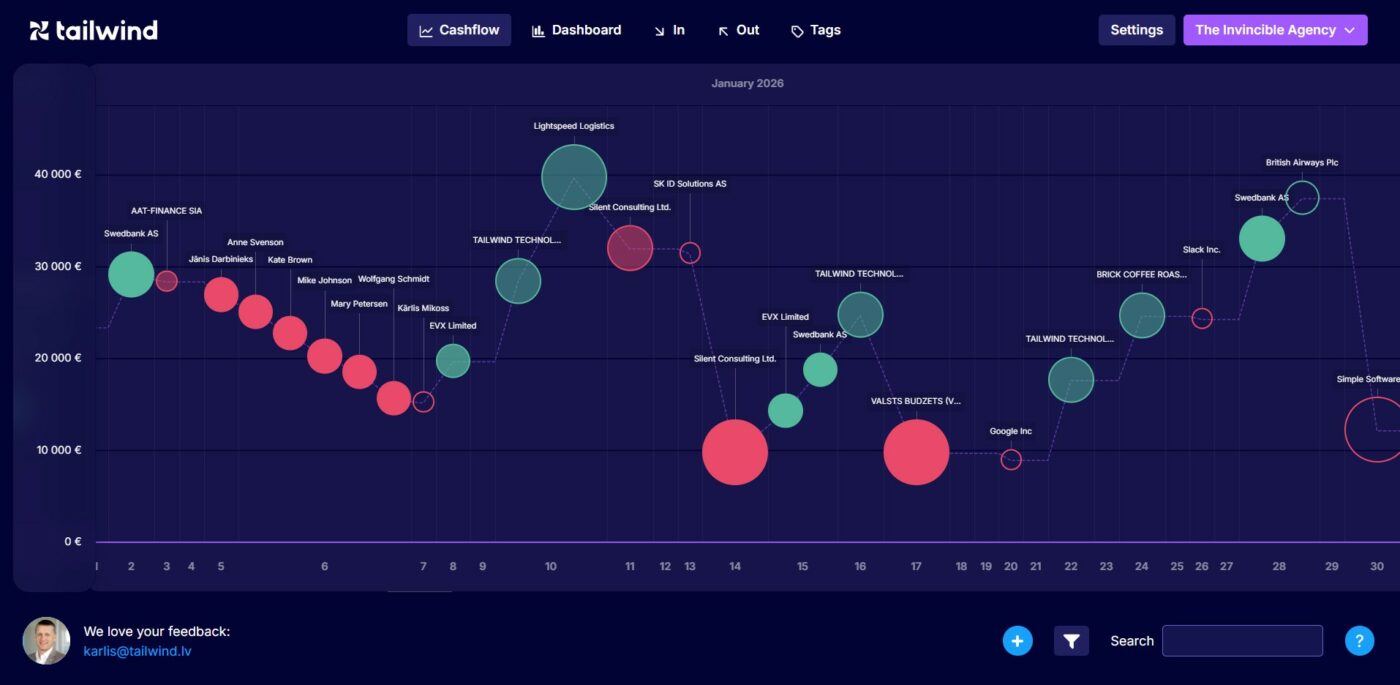
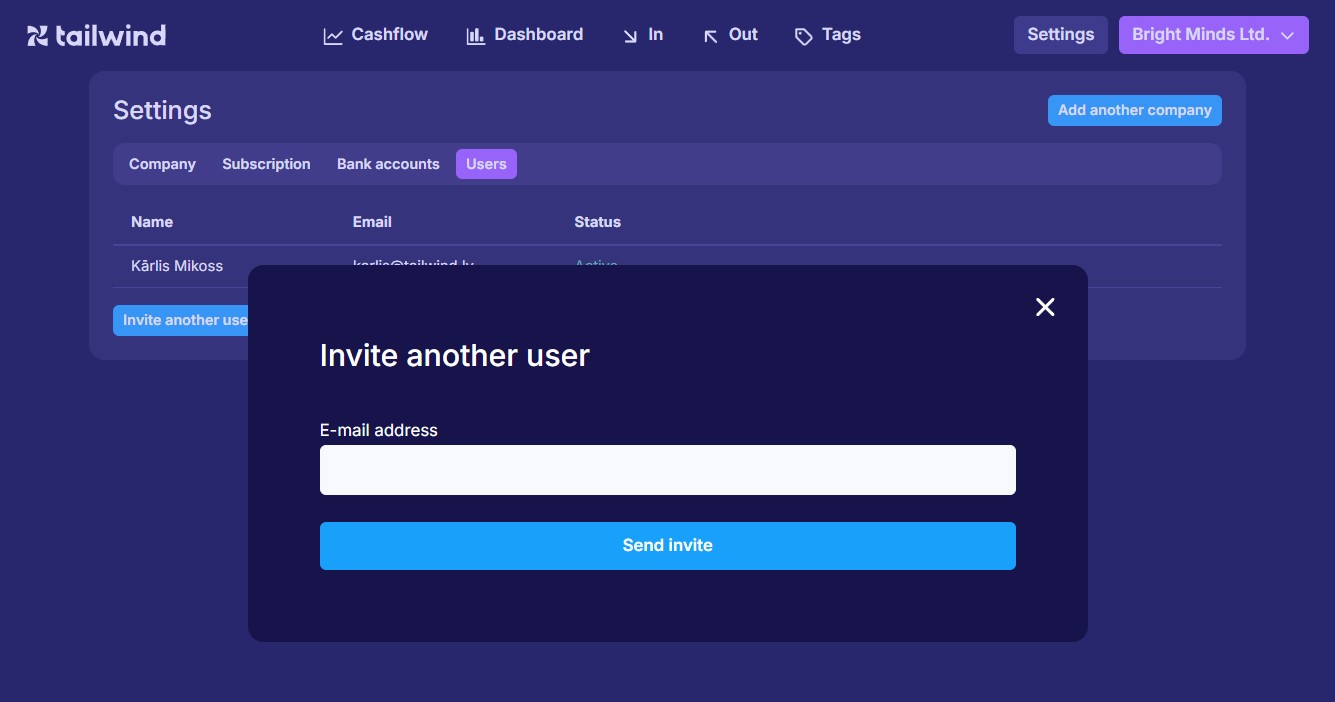
Adjusting your assumptions is very simple. Just drag and drop any planned transaction to a new date and immediately see how it impacts the forecast. You can invite any number of other users (colleagues, external accountants etc.) and agree what assumptions will each of them adjust. For example, the accountant will know the VAT amounts the best. But the project manager will know best when can we expect the final payment on a certain project etc..
And even if you decide that only one person in the company should have access to the forecast – forecasting with Tailwind will be far simpler than navigating a complex spreadsheet!